
Skip

EXHIBITORS & PRODUCTS

Hochschule Mittweida

Vehicle Tests

Description

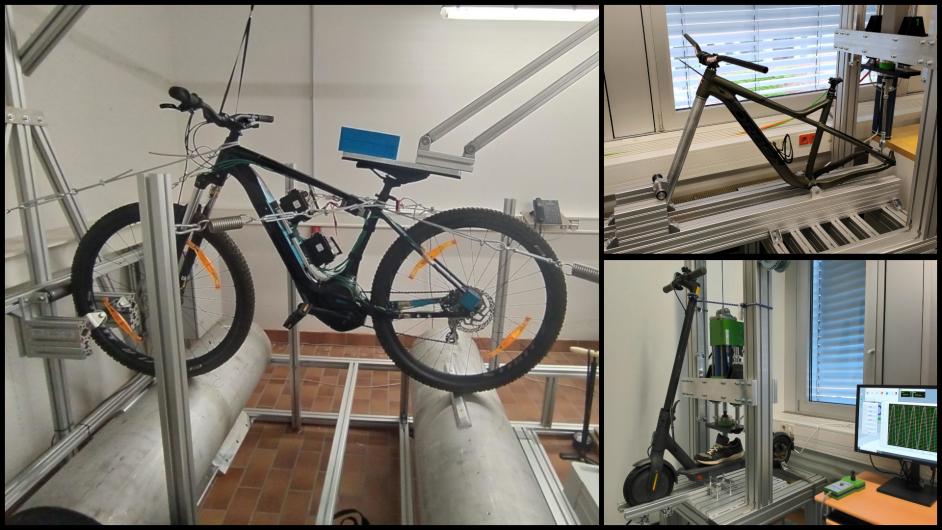
A roller test bench based on DIN 79010 is available for testing complete vehicles. This allows the durability to be tested under controlled conditions with realistic operating loads in a short time. The drum diameter is 400 mm and the speed can be continuously adjusted from 0 to 45 km/h. The load is varied by differently designed impact bars. Vehicles with a wheelbase of 1 m to 2 m, a track width of up to 1 m (single or multi-track) and a maximum weight of 280 kg can be tested.

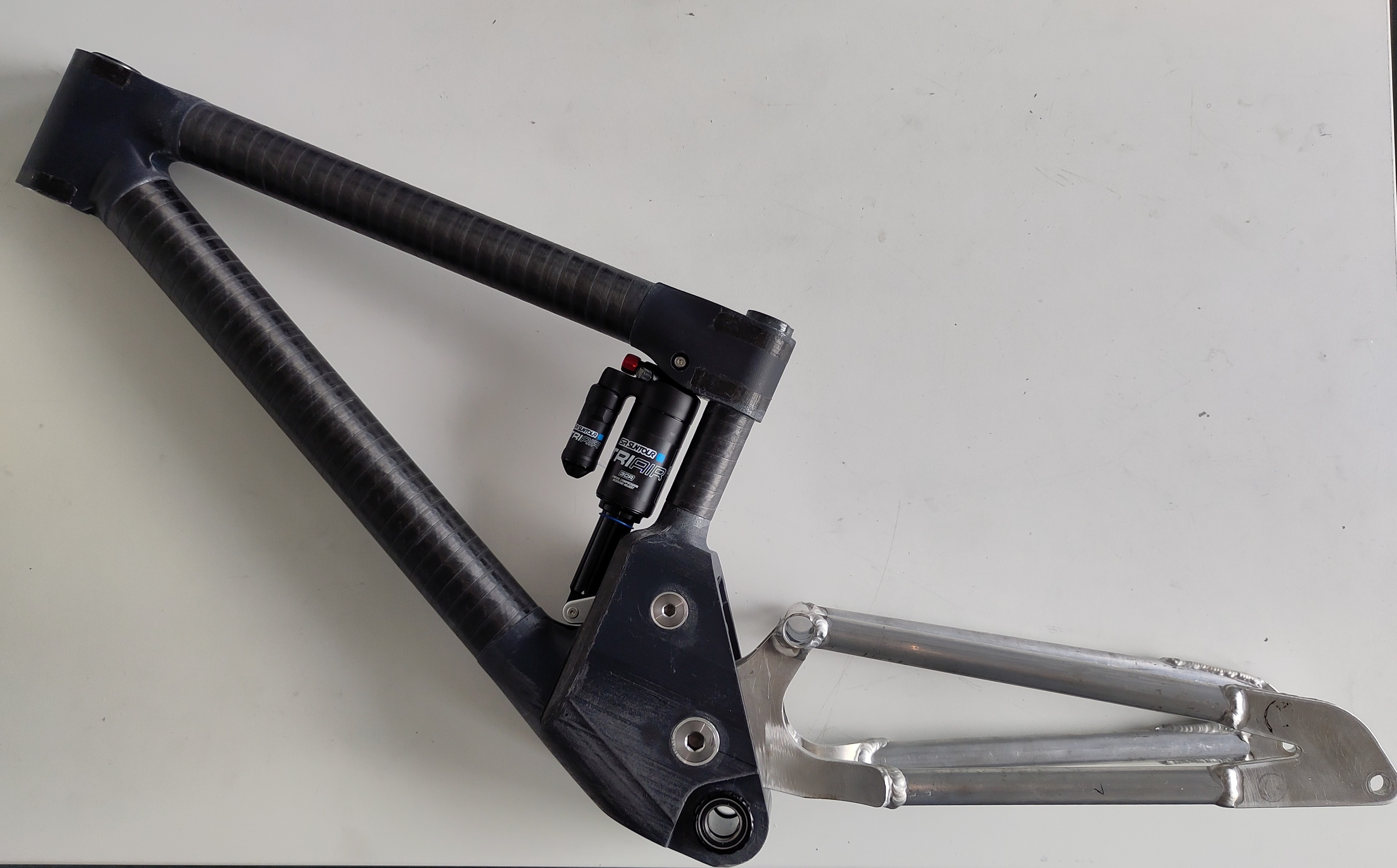
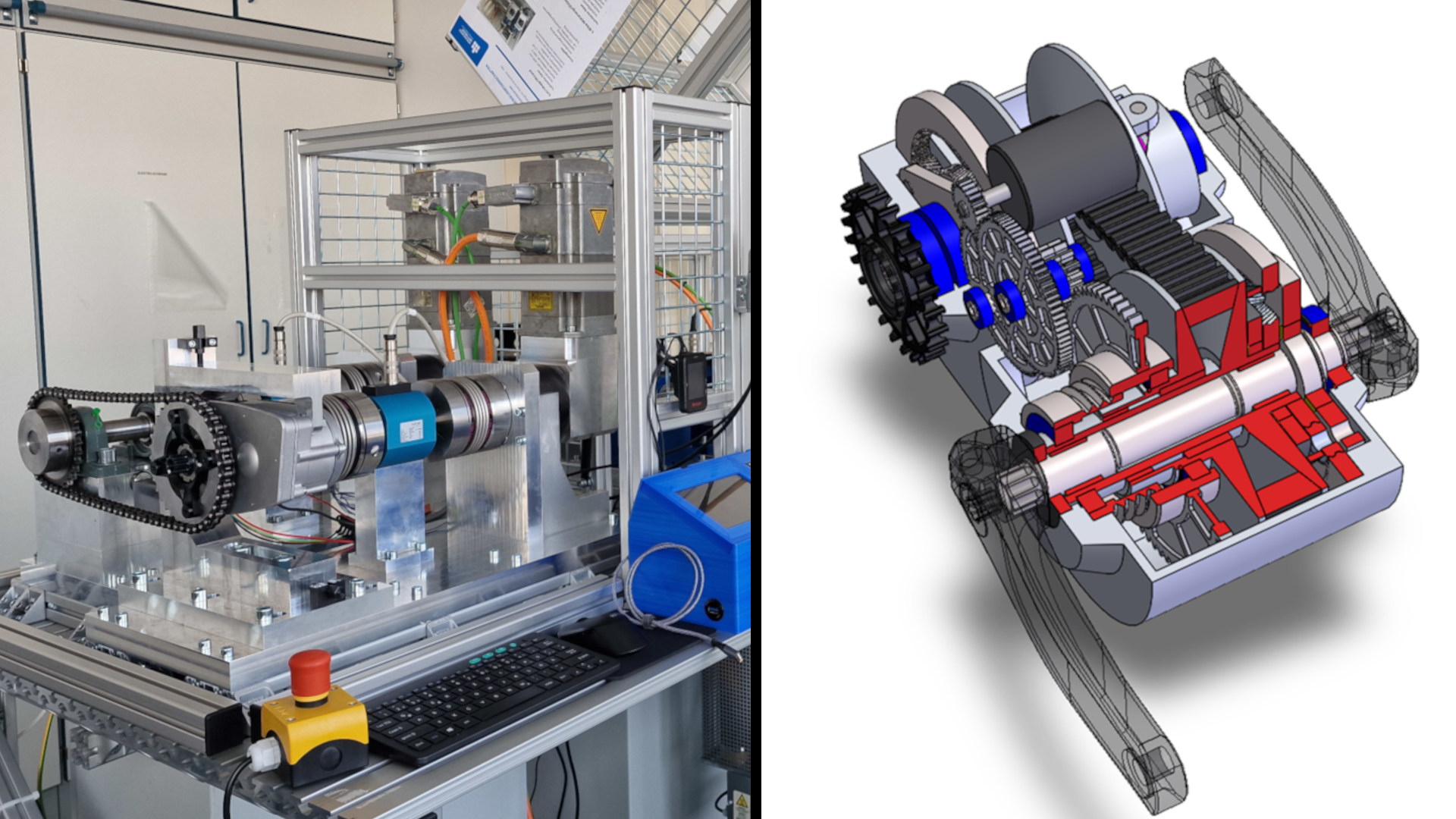
Individual parts and vehicle components can be tested using dynamic testing machines. Modular test frames made of aluminum profiles are used for positioning and fixing the test specimens. Thanks to the flexibly configurable test area, larger components such as wheels or complete bicycle frames can also be subjected to static and dynamic loads. The force is applied by one pneumatic and one electric cylinder. These can be used to apply forces of up to 7.5 kN, test frequencies of up to 10 Hz and strokes of up to 300 mm. The cylinders can be used both in single-axis operation and combined in multi-axis operation. In addition to testing in accordance with common test standards, individual test sequences and setups, tests using recreated measured signals and stiffness measurements are also possible.
More products by Hochschule Mittweida

Functional 3D printing on textiles

Revolutionary Advantages: 3D-Printed Cycling Jerseys Optimized for MTB and Road Racing

3D-printed cycling jerseys promise a new era of sportswear tailored precisely to the specific needs of mountain bikers and road cyclists. Thanks to precise manufacturing, these jerseys offer not only a perfect fit but also elevate function and protection to an entirely new level.

For Mountain Bikers: Adaptive Protection

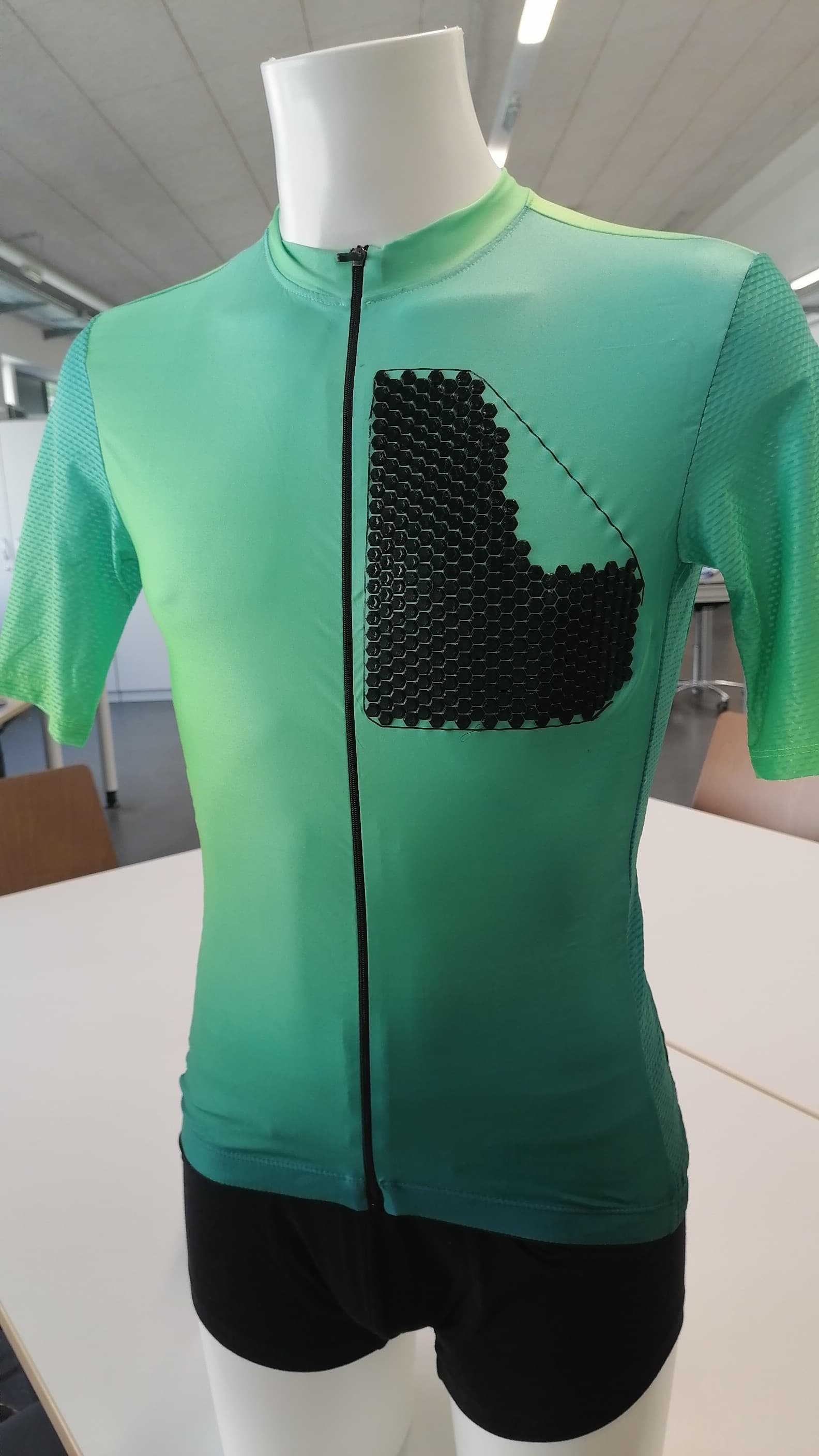
A mountain biking jersey that protects without getting in the way – that’s the vision of 3D printing. Flexible protective structures made from hexagonal elements can be integrated directly into the fabric. These honeycomb-like designs are highly efficient at absorbing impact energy (ideal for trail crashes) while offering excellent freedom of movement and breathability. Strategically placed at the shoulders, elbows, and back, they provide targeted protection where it matters most, all while being lighter and more comfortable than conventional protectors. The result is a second skin that protects and breathes with you.

For Road Cyclists: Aerodynamics That Save Seconds

In road racing, every millisecond counts. 3D-printed jerseys can make all the difference by minimizing air resistance. Fine surface textures or strategically placed guiding elements and fins can optimize airflow around the body. Much like the dimples on a golf ball, microscopic structures in the fabric influence the air in such a way that it clings longer to the body, reducing turbulence. The result is enhanced aerodynamics that help you reach the finish line faster. These invisible features are seamlessly integrated into the jersey, ensuring a perfect fit and helping you maximize performance with every pedal stroke.